Program fit
Alert Five helps agencies assess where DFR could strengthen their existing emergency response and what a pilot program would need to demonstrate.

Remote operations / DFR / BVLOS / drone docks
Plan Drone as First Responder (DFR) programs, beyond visual line of sight (BVLOS) operations and drone dock deployments.
Use the inquiry form to submit a project question.
Concept rendering of a remote operations center.
Define the mission, compare platforms, and identify staffing, site and approval needs before deployment. An engagement can produce a mission brief, evaluation criteria, and a phased implementation plan.
Signature public safety capability
Drone as First Responder (DFR) is a public safety approach that sends a drone to the scene of selected emergency calls as part of the initial response. Many programs keep drones at designated sites so they can respond while ground crews are still on their way. A drone may reach the scene first, helping responders understand the scale of an incident and spot hazards before they arrive.
That aerial perspective adds context to what dispatchers hear from callers and what crews see on the ground. As conditions change, it can help incident commanders and responding teams coordinate where people and equipment are needed.
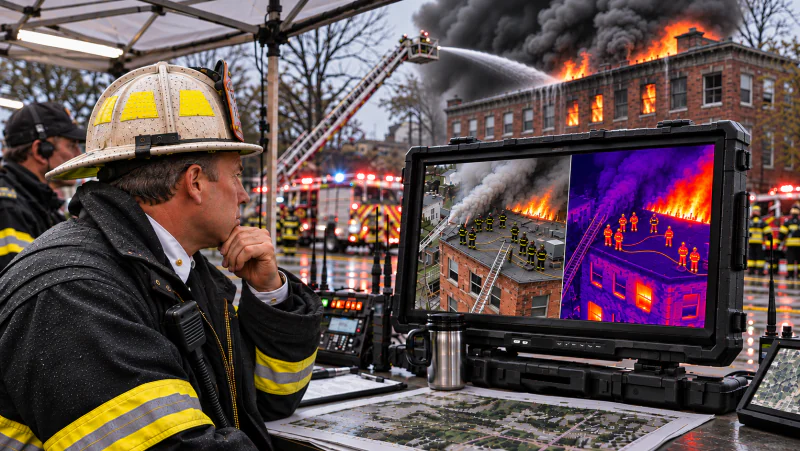
At a structure fire, a view from above can help incident commanders see where fire and smoke are spreading and which nearby buildings may be at risk. That broader picture can help them brief incoming crews and decide where equipment is needed. An aerial view can also help crews assess a rescue scene or hazardous materials incident before they approach.
During a search for a missing person, a drone can help responders see parts of the search area that are hard to assess from the ground. At a major crash, an aerial view can show how far the scene extends and where traffic or debris may limit access. In both cases, the added perspective helps ground teams coordinate their response.

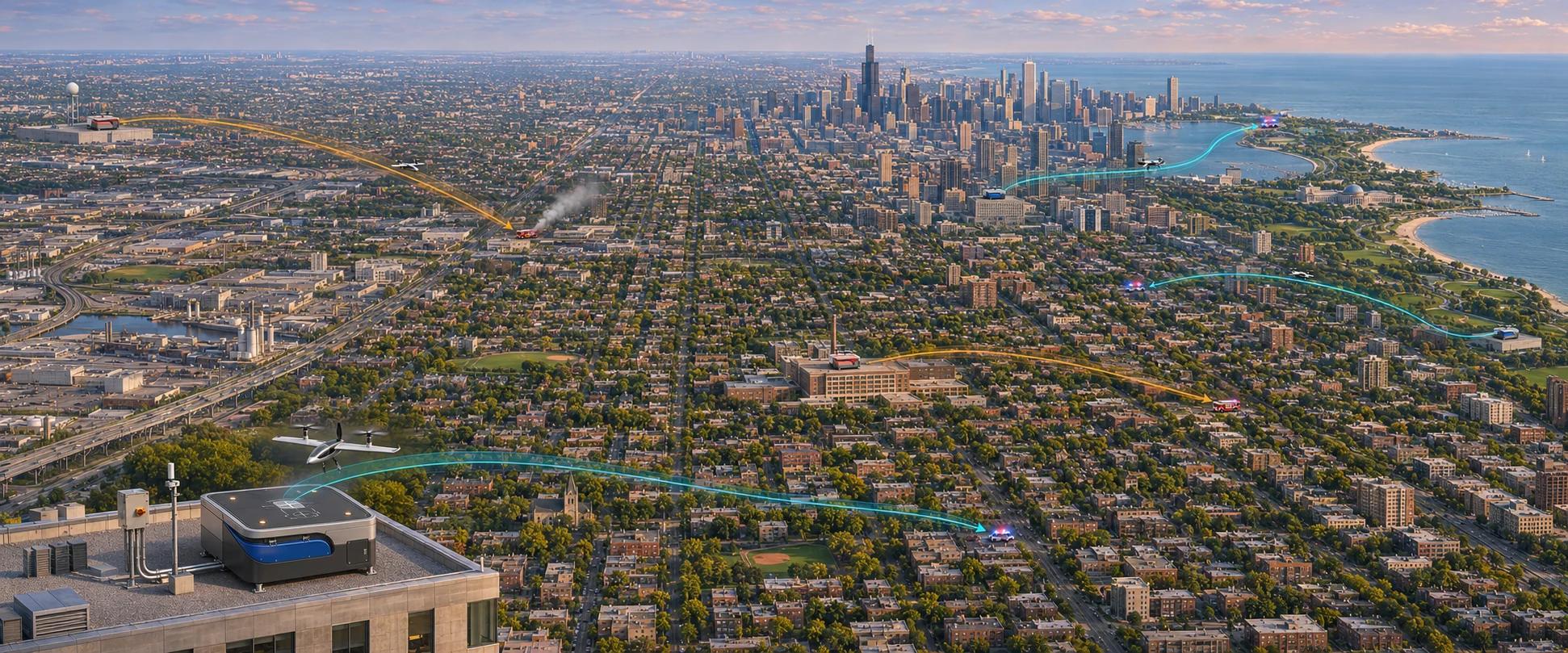
Alert Five helps agencies assess where DFR could strengthen their existing emergency response and what a pilot program would need to demonstrate.
We assess which areas a DFR program could serve and how fire, law enforcement, and dispatch teams would use that coverage together.
We help agencies account for aviation requirements, privacy, and public oversight when planning how DFR will be used.
02 / Beyond visual line of sight
Define the proposed operation, assess its risks and identify the evidence needed for the applicable FAA approval process. The operating concept, aircraft, airspace and proposed mitigations must be considered together.
Describe where and how the aircraft would fly, the remote crew’s responsibilities and the conditions that would limit the mission.
Review communications, airspace awareness, lost-link procedures, contingency planning and the evidence needed to support proposed safety measures.
Prepare the program’s technical and operational inputs for waiver planning, coordinating with qualified specialists where the scope requires them.
FAA authorization is specific to the proposed operation. A drone dock or remote-control capability does not itself authorize BVLOS flight. Review the FAA’s Part 107 waiver guidance ↗ for civil operations under Part 107. For eligible public-aircraft operations, the FAA’s Public Safety Toolkit ↗ covers the Part 91 pathway. Obtain a Part 91 waiver that expressly covers the planned BVLOS operation and any separate airspace authorization the FAA requires.
03 / Dock-based operations
Evaluate the dock as part of an operating system: aircraft, site, power, communications, remote crew, maintenance and data delivery. Compare systems against the mission and long-term operating requirements.
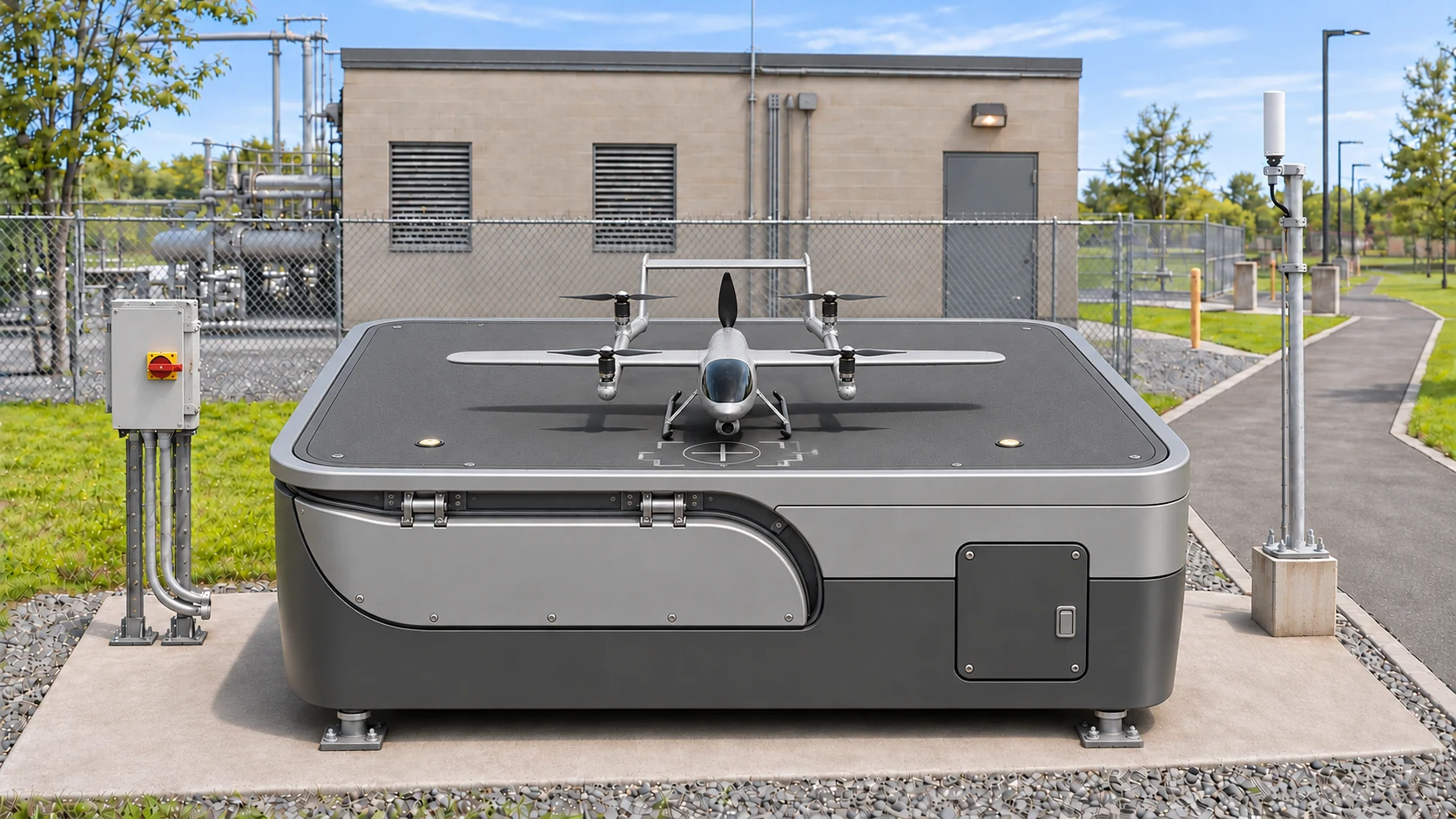
Assess aircraft and payload suitability, siting, weather exposure, connectivity, power and the practical requirements for servicing the installation.
Define crew responsibilities, mission scheduling, command-and-control needs, exception handling and procedures for interruptions or equipment faults.
Review data access, software interfaces, support arrangements, maintenance costs and the options for expanding or replacing equipment over time.
04 / Technology assessment
New aircraft, sensors, automation and communications can change what a remote program can do. We examine those developments against operating needs, integration effort and regulatory requirements.
Separate demonstrated functions from supplier claims. Define the trials and acceptance checks needed to evaluate a proposed system.
Examine interoperability, data portability, sensor options and vendor dependence before committing to a platform.
Set an evaluation and implementation sequence with clear decision points before expanding sites, mission types or fleet size.
What an engagement can produce
Discuss your project
Tell us about your mission, current program and the operational or technical questions you need to resolve.
DFR program planning.
BVLOS requirements.
Dock and technology evaluation.